How Locus filters tokens.
Every token Locus considers passes through three separate layers before it ever reaches your feed. Nothing gets alerted on the strength of a single check. Here's the shape of it.


 Locus
- 1Market data
- 2On-chain safety
- 3AI judgment
Calculated from every call on the public ledger, losses included. Open calls aren't counted in the win rate until they're scored.
What you actually get in the group ↓
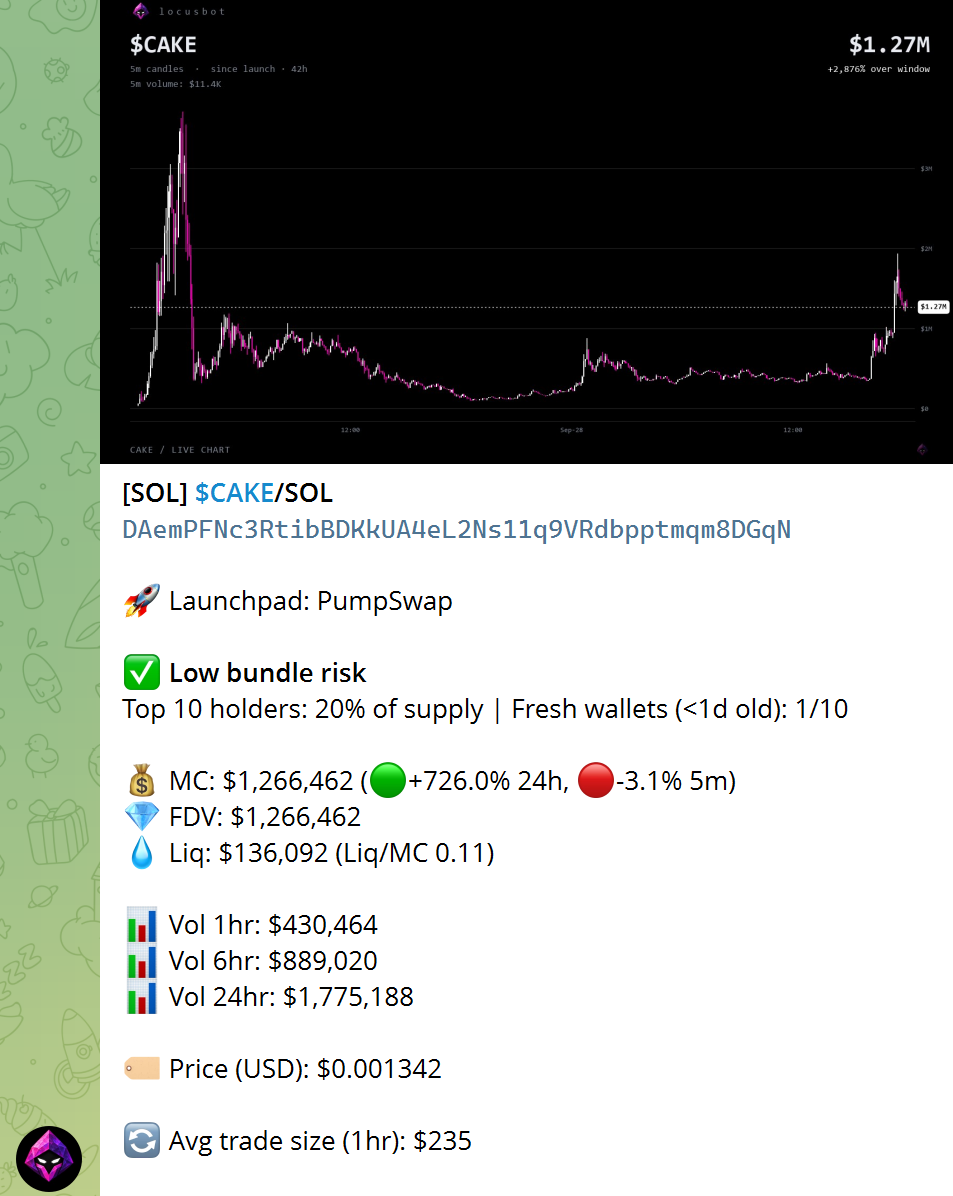
Locus scans tokens for you
So you don't have to. Every candidate gets the full scan, chart and all, before it ever reaches you.
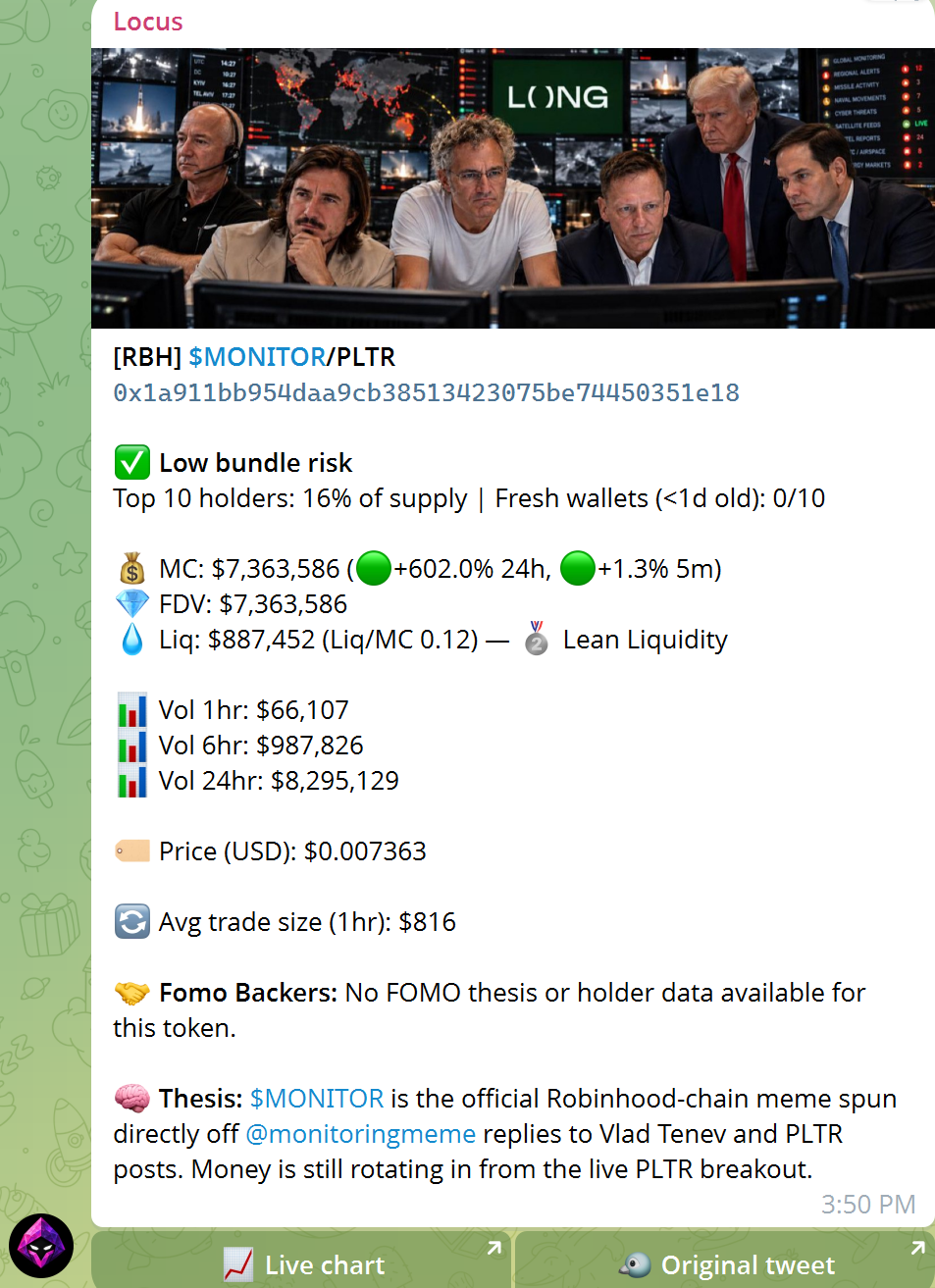
A thesis on every token
Locus researches the engagement around a token on X and tells you why it's moving. Then it gives its call: a real narrative, or just a volume spike that's about to dump.
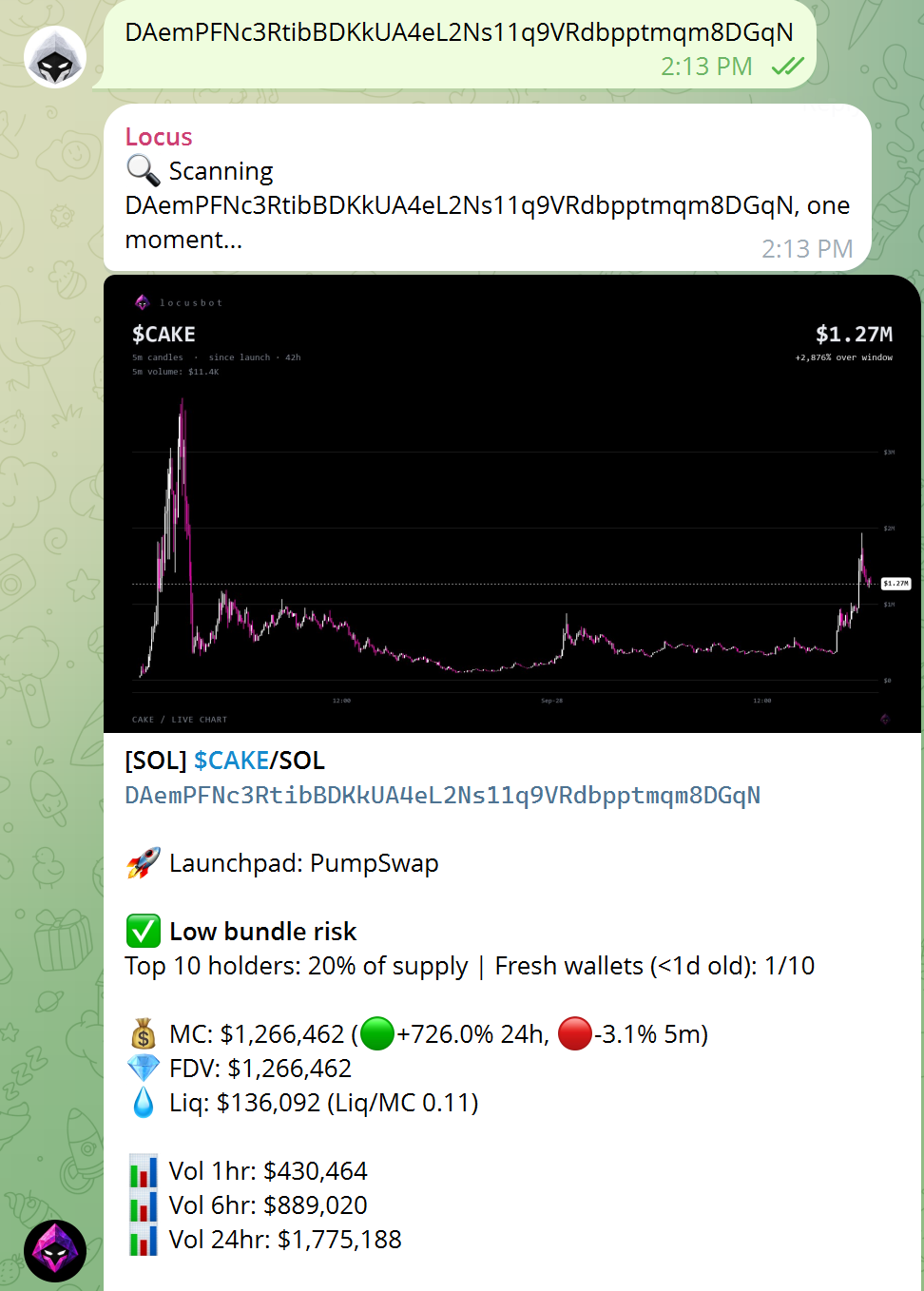
Scan any token you want
Paste a contract address and Locus runs the full scan on it: chart, bundle risk, holders, liquidity and volume, in seconds.
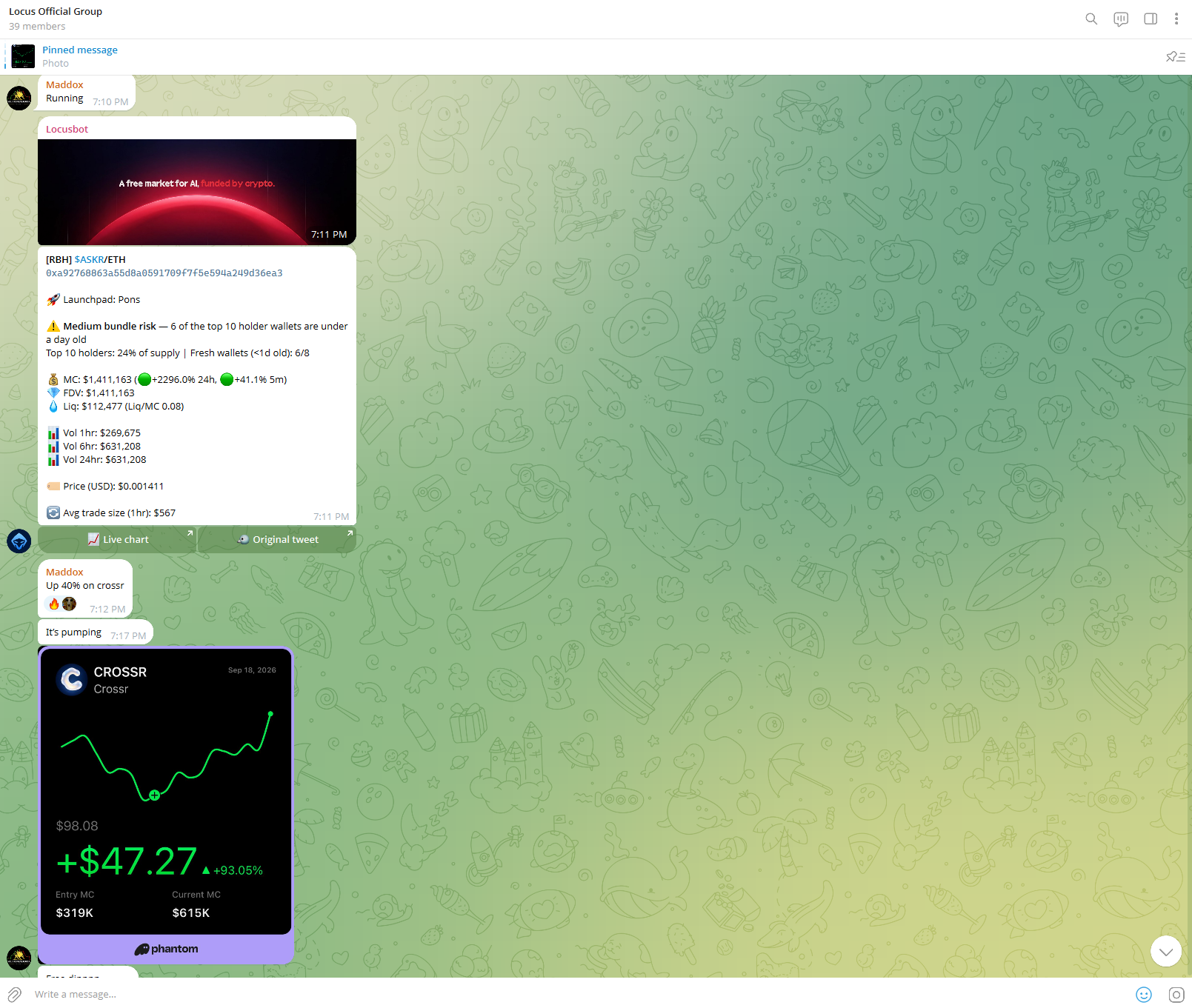
Chat with friends!
Watch a call together in real time, not alone in a DM. The group reacts to the same alert you just did.
Market Data
Pure math against live market data. A token has to clear every one of these before it's even a candidate:
Filters out the overwhelming majority of new listings.
On-Chain Safety
Anything that clears Stage 1 gets a wallet-level background check, pulled straight from the chain:
A token that fails here gets dropped, no matter how good Stage 1 looked.
AI Narrative Judgment
For tokens riding the market's exact meta but not cleanly clearing Stage 1, Grok (xAI's model, with live access to X) makes one real call: does this actually fit, or just look like it?
Most tokens that reach this stage still get rejected here.